I've always been drawn to Fuller's geodesic dome. The strength came from geometry alone. Nothing held it together but the shape itself. I wanted to make something small enough to hold, but built on the same idea.


A truncated icosahedron has 32 faces. 12 pentagons, 20 hexagons. That’s where the name comes from. Sphere32. Same geometry as a soccer ball, a carbon-60 molecule, a Fuller dome. The math has been there for centuries. I just needed to find a way to take it apart.


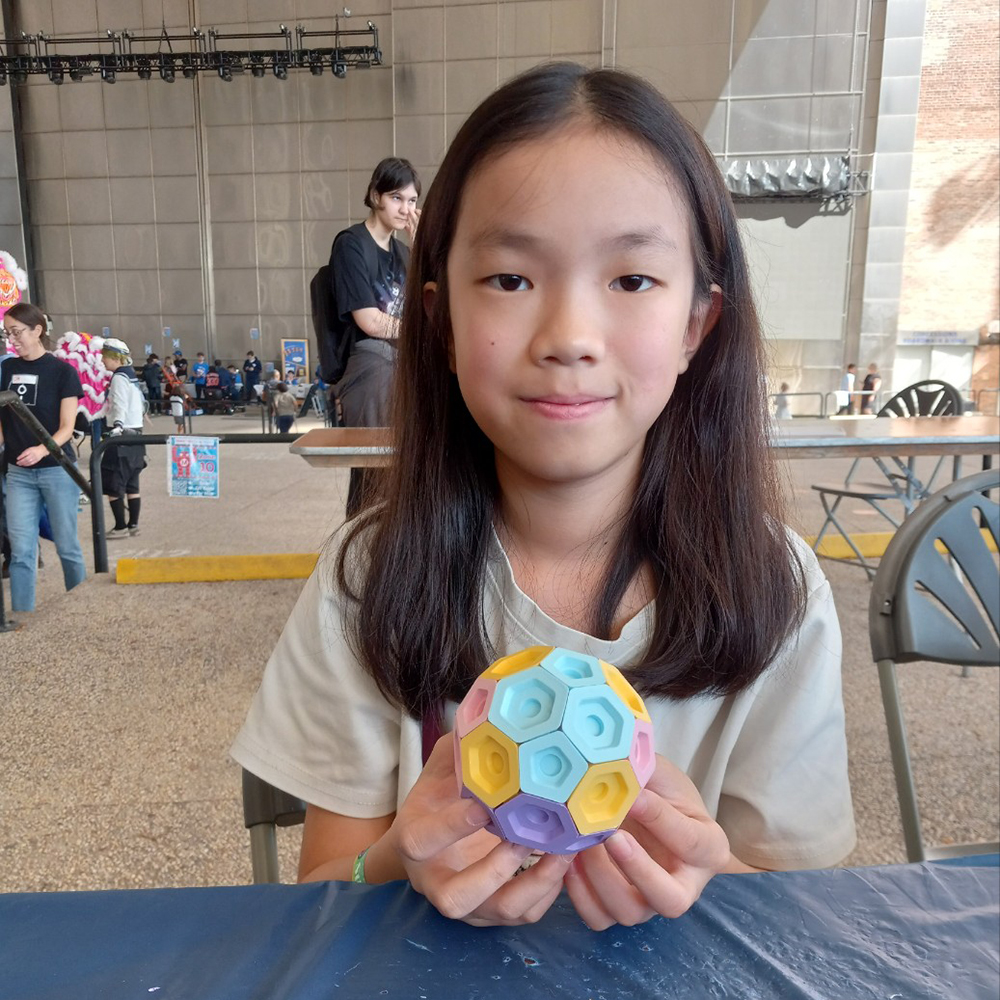
Each of the 32 pieces is its own face. The pentagons lock with the hexagons through interlocking edges. No glue. No screws. Just precise tolerances and the geometry itself doing the work. Take it apart. Build it again. Mix in different surfaces.


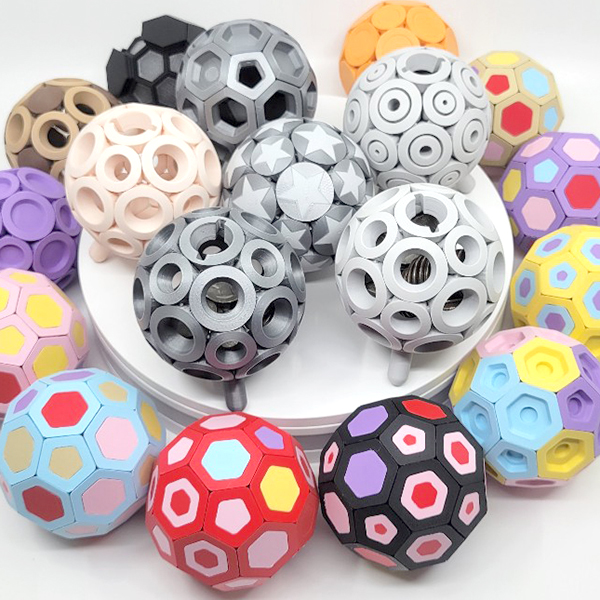
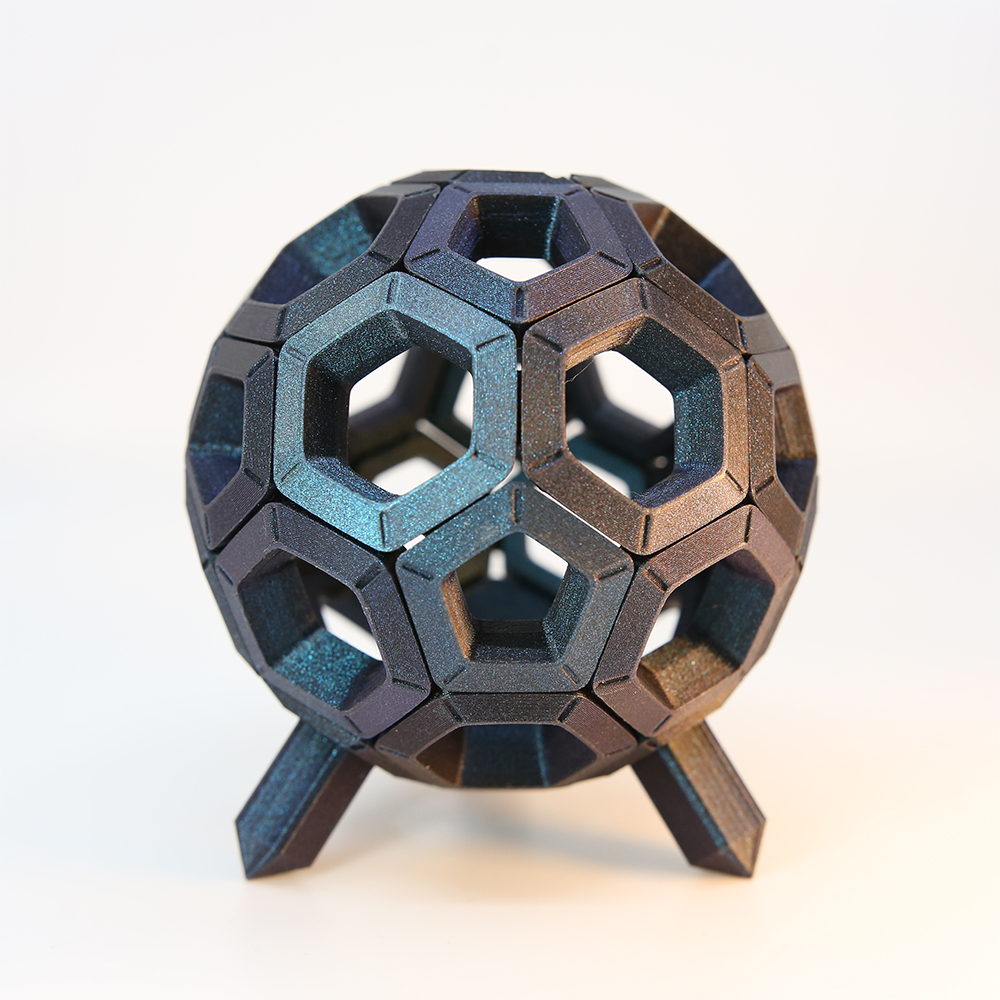
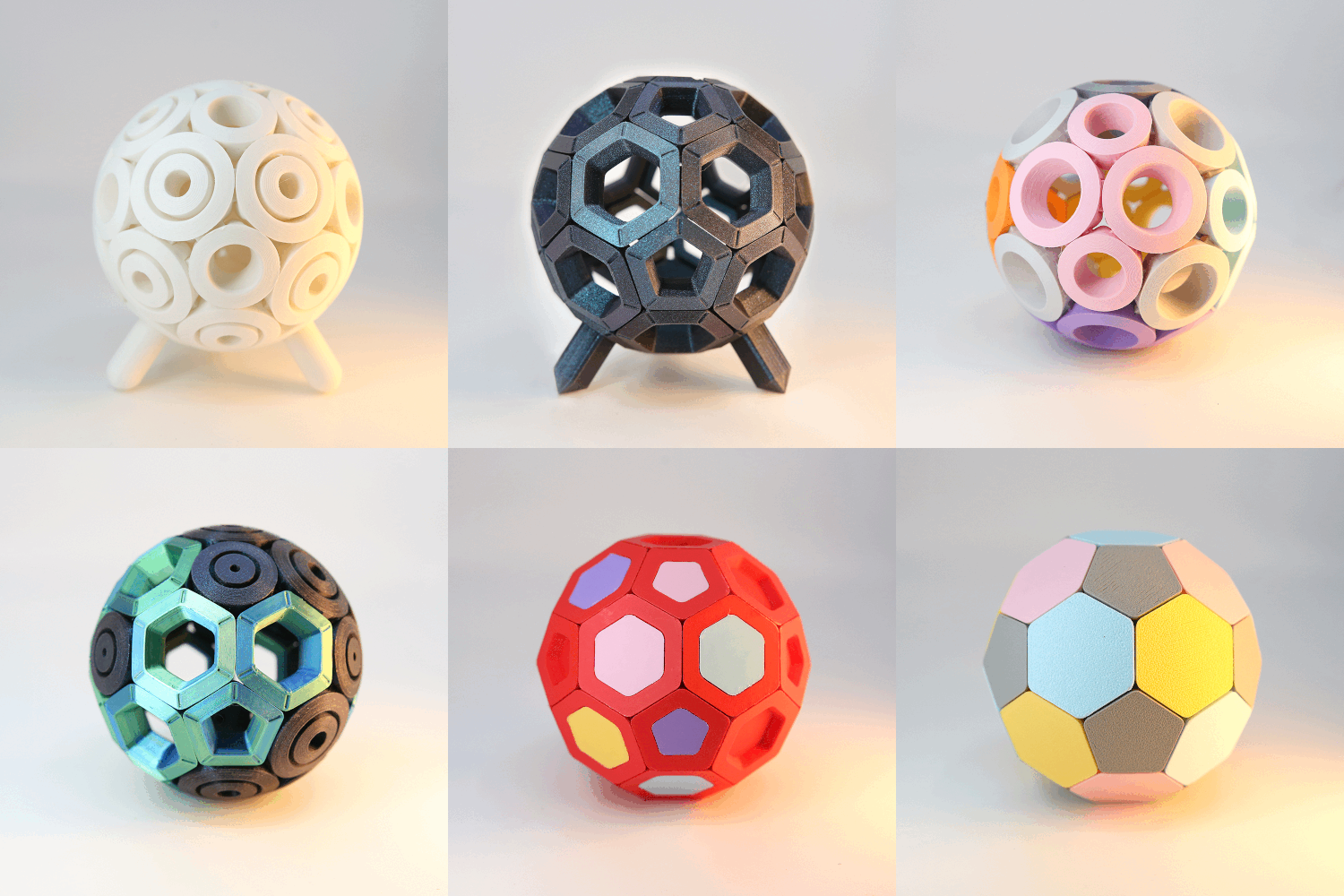
I made each face its own canvas. Concentric rings. Hollow centers. Negative-space hexagons. A single embedded star. These are only the tip of the iceberg. Sphere32 invites endless variations — designed by me, or discovered by you.

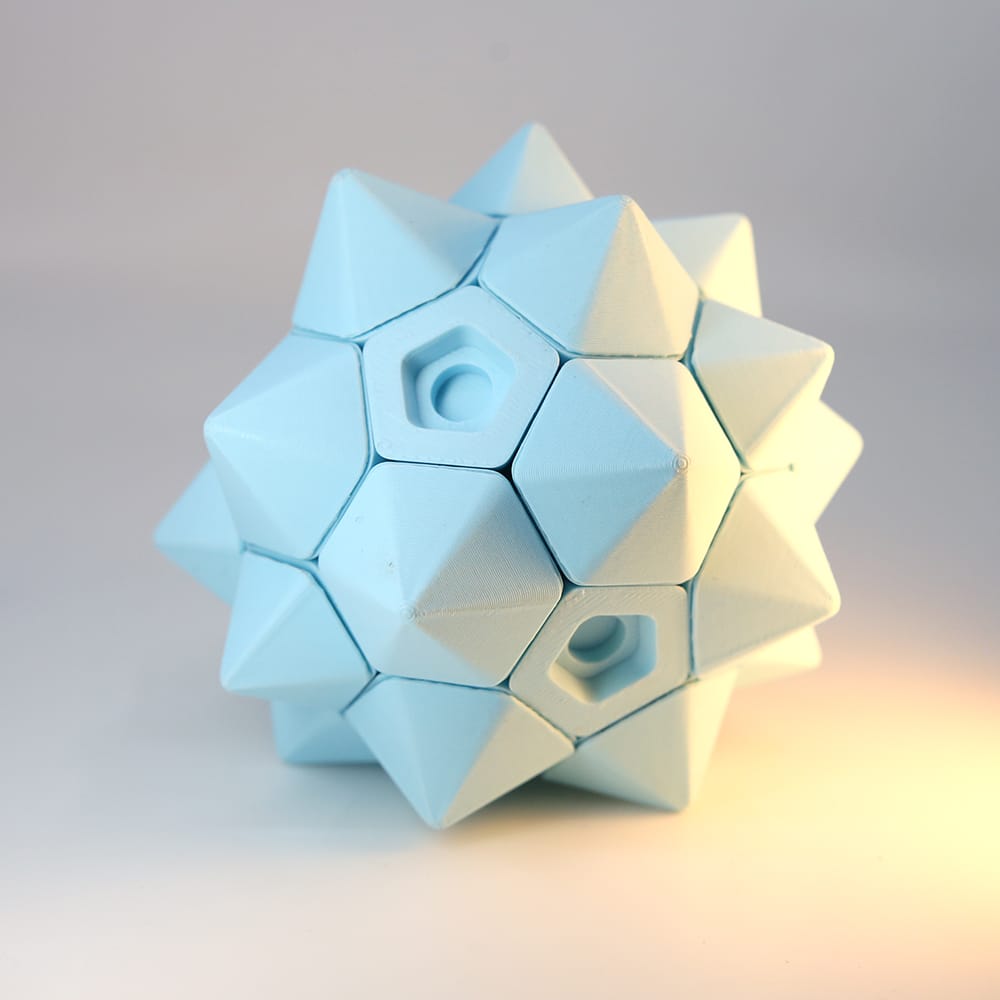
The pieces are 3D-printed and finished by hand. Matte white, brushed steel, iridescent teal, pastel sets, monochromes. Each colorway changes how the light falls on the form. The geometry stays. The mood shifts.
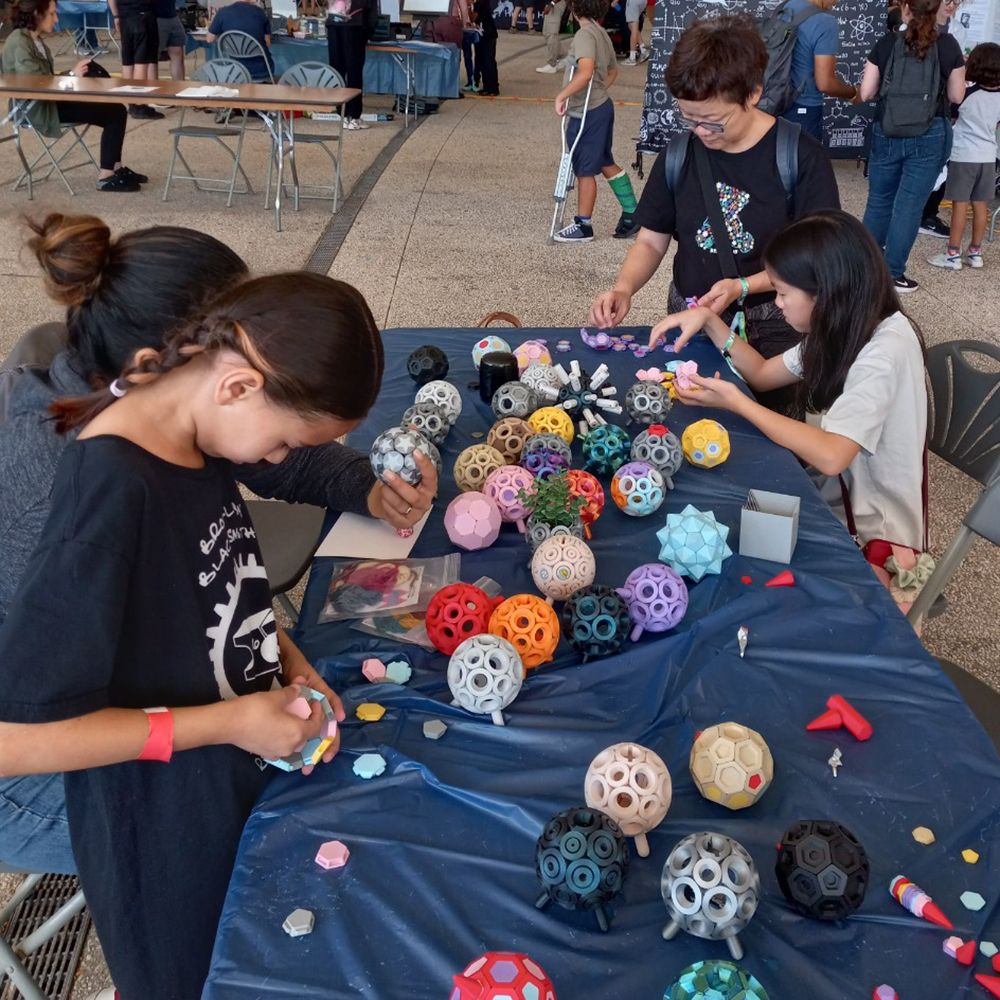
Last fall we brought Sphere32 to the Coney Island Maker Faire. We set up a booth. People stopped, picked up the pieces, and started building. Some worked alone, lost in their own version. Others teamed up, swapping strategies. Kids dragged their parents over. A few asked for hints. Most figured it out themselves.
Watching it from behind the booth was the part I won’t forget. A mother and daughter trying different combinations, both leaning in. A boy quietly building alone, focused for twenty minutes straight. Strangers becoming a small team for ten minutes, then walking away with a smile. That was the moment I understood what we’d really made.
A parent told us it would be perfect for geometry class. By the end of the day, we were exhausted, but we had our answer. Sphere32 wasn’t just an object we’d designed. It was something people wanted to spend time with.